Similarly, total liabilities are 40% of total assets, with long-term debt making up 30%. This vertical analysis provides insights into the company’s financial structure and the proportion of financing coming from debt versus equity. Expressing the financial statements as percentages of total revenue or total assets allows easy comparison of the proportion of each item over time.

A. Income Statement Analysis
This information will provide a better understanding of which areas of your company are generating high and low revenue. This analysis helps see the proportion of each item compared to the net profit, providing insights into where the money is coming from and where it is being spent. The Vertical Shaft Machine (vsm) Market is divided by product type, application area, end-use industry and region. The product Moderna range ranges from basic options to modern high-performance solutions.
Understanding Financial Statements

Europe, especially Germany, France, and the U.K., is projected to increase its market share due to advancements in cement and lime production technologies. In the Asia-Pacific region, China and India are expected to dominate, driven by rapid industrialization, with China holding approximately 30% market share. Latin America, led by Brazil and Mexico, and the Middle East & Africa, particularly Saudi Arabia and the UAE, will contribute to global growth but at a lesser scale, with market share around 10% for these regions. Overall, North America and Asia-Pacific will likely account for the largest market shares, emphasizing their critical roles in the vertical calciner industry.
- The pharmaceutical industry is a massive growth opportunity for the GCC countries VLM market space, especially in temperature-controlled storage.
- Ultimately, financial statement analysis guides internal strategies and attracts external investment by showcasing financial strength and resilience.
- The information provided in the balance sheet provides the change in working capital, fixed income over some time.
- Expressing each balance sheet line item as a percentage of the base allows analysts to understand the relative composition of assets, liabilities, and equity.
- Sometimes, financial statements are prepared in this way by the provider but often FP&A analysts will utilize their own basis depending on what information they are trying to understand.
- This report provides executives, investors, and strategists with actionable insights to navigate the rapidly evolving Vertical Shaft Machine (vsm) Market.
How does Horizontal Analysis differ from Vertical Analysis?
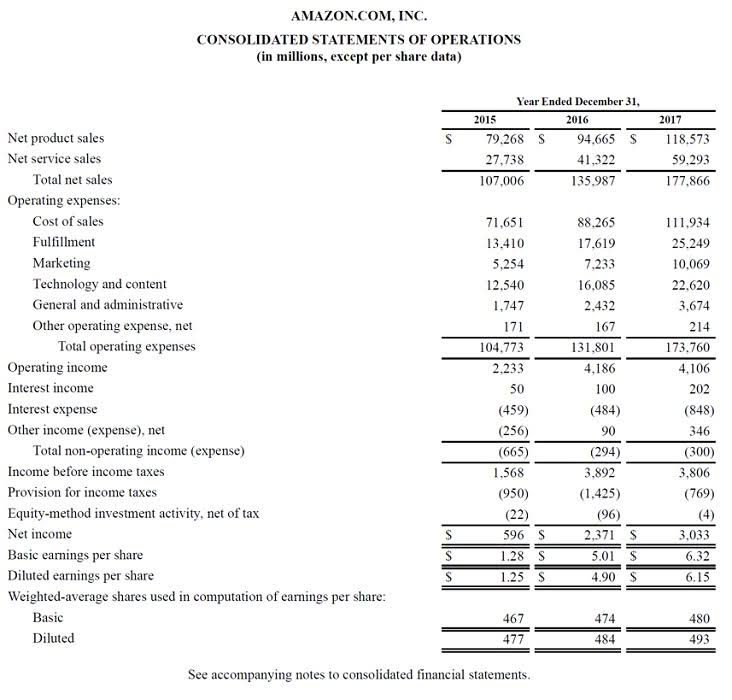
The individual line items (revenue, cost of goods sold, operating expenses etc.) are divided by total revenue. Vertical analysis is a method employed in financial statement analysis to illustrate the relative size of each account in relation to the total amount. Vertical analysis represents each item vertical analysis on a financial statement as a percentage of the total. A comprehensive study published in the Journal of Financial Analysis (2023) showed that vertical analysis helps in benchmarking and comparing companies, resulting in a 25% increase in performance assessments accuracy. The research involved data from 150 multinational companies and demonstrated how vertical analysis facilitates better comparison regardless of company size differences. This method transforms the raw financial data into a proportional analysis, facilitating a more straightforward assessment of economic health and operational efficiency.
- Manufacturers and distributors prefer non-refrigerated VLMs due to lower maintenance requirements and simpler regulatory compliance.
- From deciding on the base figure you’ll use to calculating and interpreting the results, each step is crucial in ensuring the accuracy and reliability of your analysis.
- The future scope of the Vertical Prevacuum Sterilizers Market is expected to be shaped by deeper AI integration, advanced automation, and data-driven decision frameworks across regions.
- This allows users to work in the comfort of Microsoft Excel with the support of a much more sophisticated data management system at their disposal.
- For example, two retail firms may have vastly different revenue amounts, but expressing the costs of goods sold as a percentage of revenue shows which has a better cost structure.
- North America continues to dominate the market, supported by a robust technological ecosystem, early adoption of advanced solutions, and sustained investments in innovation and automation.
These examples illustrate how vertical analysis transforms complex financial data into understandable metrics, aiding in effective decision-making and financial reporting. Used together, both methods can tell you a lot about a company’s cost structure and performance trends. You should use them together with financial ratios and other metrics for a complete picture of financial health, though. For instance, we can see that our company’s long-term debt as a percentage of total assets is 17.0%.
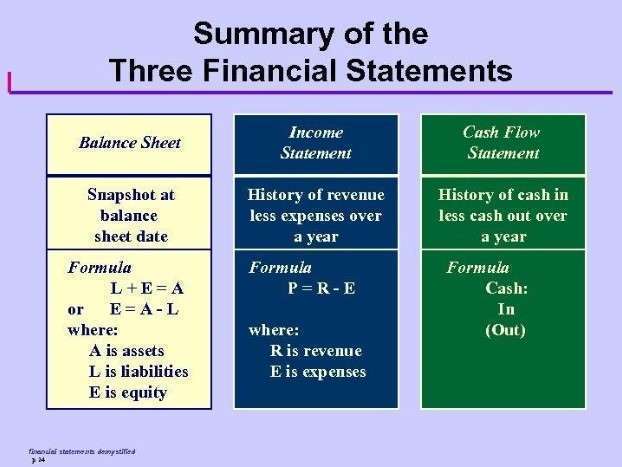
When looking at the financial statements of your business, it can get quite confusing due to the different figures used. By leveraging these practical applications, you can harness the power of vertical analysis to enhance financial decision-making and improve overall business performance. The cash flow statement tracks the inflows and outflows of cash in a company during a given period.
- Looking to streamline your business financial modeling process with a prebuilt customizable template?
- By being able to measure which cost areas of the business are rising (falling) as a proportion of sales, one can then look at the contributing factors in more detail.
- For CEOs and decision-makers, this analysis is an essential tool to anticipate market shifts, capture growth opportunities, and make data-driven decisions with confidence.
- The major consumers of automated vertical carousels are warehouses, manufacturing facilities, retail stores, and distribution centers.
- Investment opportunities in the VSM market are centered around developing sustainable and efficient VSMs to meet the growing demand for environmentally friendly solutions.
- In this blog, we’ll explain what it is exactly, how it compares to other types of analyses and how top companies use it to improve budgeting, forecasting, and decision-making.
It allows stakeholders, including investors, analysts, and management, to gain valuable insights into a company’s financial structure and performance. The simplicity and clarity of vertical analysis in breaking down financial data make it a powerful tool for businesses of all sizes. It breaks down complex financial statements into easily digestible percentages, facilitating quick assessments of financial health and operational efficiency.
Both techniques provide valuable insights for financial analysis and decision-making, but they serve different purposes and offer distinct perspectives on a company’s financial performance. To overcome these limitations, it’s a good idea to use vertical analysis in conjunction with other financial analysis techniques, such as horizontal analysis or ratio analysis, as well as other financial ratios. Notice that the column presenting the ratio of each line item to gross sales is to the right of the actual values. Sometimes, financial statements are prepared in this way by the provider but often FP&A analysts will utilize their own basis depending on what information they are trying to https://spcomputeracademy.com/2024/02/09/quickbooks-login-for-training-and-quickbooks/ understand. Vertical analysis is the comparison of financial statements by representing each line item on the statement as a percentage of the total amount.
For sales or inquiries, contact
Horizontal Analysis, also known as trend or time series analysis, compares financial data across multiple periods to identify trends and changes by calculating dollar or percentage differences from a base period. A startup might have high operating expenses as a percentage of revenue due to initial investment in growth, while a mature company might have lower percentages due to established operations. Comparing these companies using vertical analysis alone may not provide an accurate assessment. Showing the relative size of each financial statement item allows investors and analysts to assess the financial structure of companies. Vertical Analysis using the Balance Sheet is particularly useful in comparing companies of different sizes. According to a report by Deloitte India, 85% of large corporations employ vertical analysis in their financial reviews.
What are the key trends in the automated vertical carousels market?
Utilizing tools in conjunction with vertical common size analysis significantly helps with financial reporting. It enables businesses to gain quick insights into historical performance by comparing current values to previous periods. Financial statement analysis offers a clear and comprehensive view of a company’s financial health for both internal stakeholders, such as the finance team and business leaders, and external stakeholders, such as investors. It also keeps finance professionals, and investors informed about business and market trends, enabling better decision-making. Each income statement, balance sheet, and cash flow line item is evaluated side by side. This process Cash Disbursement Journal allows me to quickly identify trends that might otherwise remain hidden in raw financial statements.